

Articulation between agendas and projects in a megadiverse country
The IKI Interface Peru acts at the national level, maintaining close coordination with the Technical Secretariat of the Peruvian-German Climate Partnership.


The IKI Interface Peru works to strengthen the articulation between the projects of the International Climate Initiative (IKI) in the country, promoting the exchange of experiences, the coordination of initiatives and the identification of opportunities for collaboration. The objective is to expand the impact of the portfolio's joint contribution to national climate action and biodiversity conservation goals.
Currently, the IKI Interface Peru function is implemented within the framework of the NDC Peru II project and acts at the national level, maintaining close coordination with the Technical Secretariat of the Peruvian-German Climate Partnership.
"Our role is to connect the different projects, create spaces for them to share experiences and learnings and, above all, identify opportunities for them to work in a more coordinated way," explains Miriam Velasco, director of the project. According to her, the "Interface" function seeks to turn the diversity of initiatives in the portfolio into a collective force to support Peru's climate and environmental priorities.
The IKI Interface in Peru, implemented by Deutsche Gesellschaft für Internationale Zusammenarbeit (GIZ), has as its main political partner the Ministry of the Environment (MINAM) of Peru. Cooperation and coordination with this entity contributes to bringing IKI projects closer to national climate policy processes, while allowing the priorities and demands identified in the country to be incorporated into the initiatives.
This liaison function also extends to the articulation of global agendas on climate and biodiversity with the national context. To this end, the Interface promotes the IKI Peru Annual Meetings, the Communities of Practice —on the topics of gender and climate financing—, actions to disseminate results and good practices, and knowledge management initiatives.
"It is important that the international agenda does not move away from the reality of the territory. The spaces for exchange allow these agendas to be discussed precisely based on the challenges and concrete experiences of the projects being developed in Peru," says Velasco.
Cooperation and coordination
One of the main milestones of the Interface in 2026 was the celebration of the sixth edition of the IKI Peru Annual Meeting. The event once again brought together the projects of the portfolio in a space dedicated to exchange, learning and coordination. Based on the discussions held during the meeting, common needs were identified that gave rise to new collaborative initiatives.
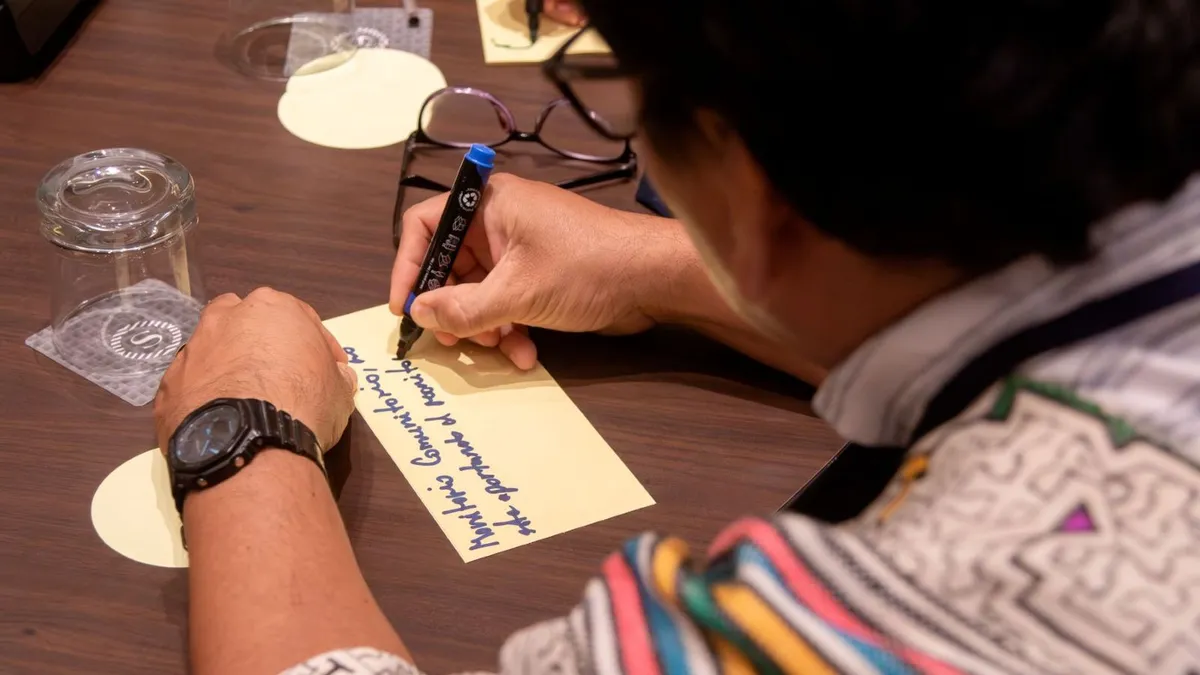
Thus, in 2026, the call to form two Communities of Practice was launched. The first, dedicated to gender, is jointly promoted by the IKI Interface Peru, through the NDC Peru II project, and the Living Amazon Landscapes project implemented by CARE Peru. The second, focused on climate finance, is promoted by the Future Landscape Peru project, implemented by The Nature Conservancy (TNC) in Peru. Both initiatives arose from the demands identified by the projects themselves and seek to generate spaces for knowledge exchange and thematic collaboration.
"The launch of these communities highlights the importance of listening to projects. When an initiative arises from a need identified by those who work directly on a specific issue, it tends to be more relevant and generate greater commitment among participants," says the director.
The celebration of the Annual Meeting of IKI Peru and the development of the Community of Practice on Gender are part of the indicators foreseen for the Interface. The Community of Practice on Climate Finance is a complementary initiative, created to meet the needs identified by the IKI portfolio in Peru and to deepen the articulation of the portfolio.
The experience also highlights important challenges. The diversity of the portfolio, made up of projects executed by different organizations, requires a permanent effort to coordinate and align institutional priorities. The sustainability of the spaces for articulation is another challenge, especially in a context of changes in government and the updating of national priorities in the environmental and climate fields.
"Articulation does not occur automatically. It is necessary to generate trust, find common interests and create spaces that make sense for the different organizations. It is a continuous work," says Velasco.
A particular feature of the Peruvian experience is the close connection with the Technical Secretariat of the Peruvian-German Climate Partnership. This articulation makes it possible to link the IKI portfolio to the bilateral climate cooperation mechanism between Peru and Germany, expanding the exchange of information and the identification of opportunities for collaboration.
"This proximity allows us to consider the IKI portfolio not as a set of isolated projects, but as part of a broader climate cooperation agenda between Peru and Germany," explains the director.
The participating projects are already reporting concrete progress in the dialogue and learning processes. The spaces promoted have contributed to the exchange of experiences, the identification of possibilities for cooperation and the strengthening of peer-to-peer learning.
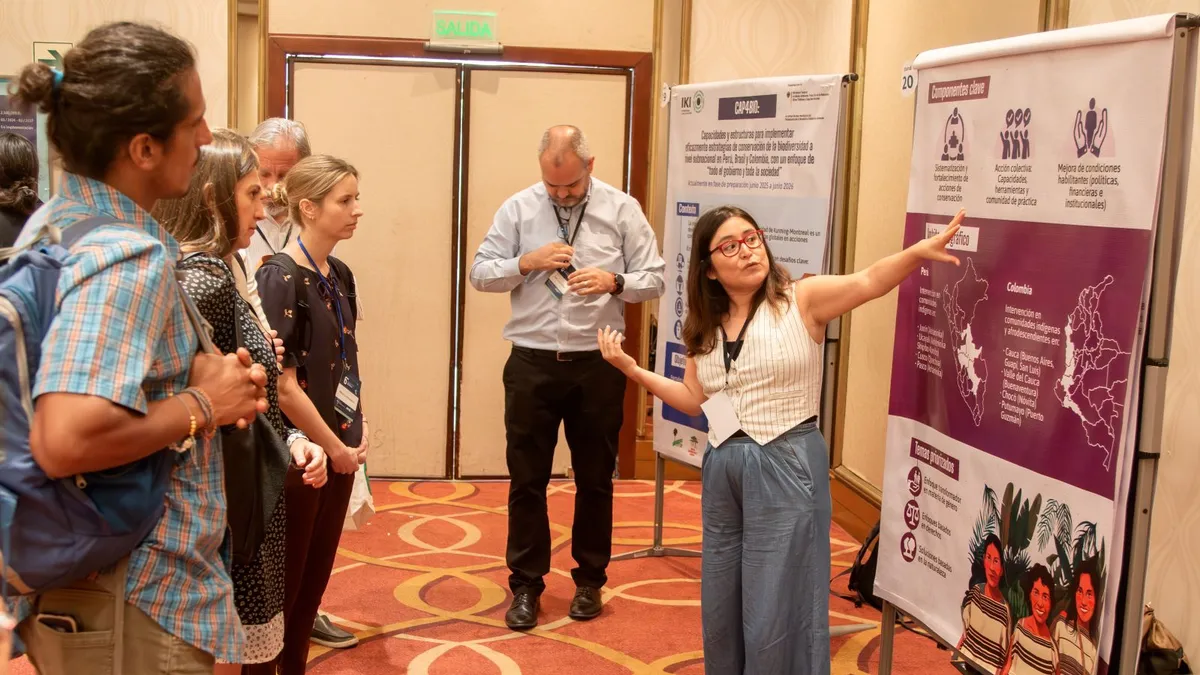
Looking ahead, the Interface seeks to advance the formation and consolidation of the Communities of Practice on Gender and Climate Finance, improve coordination with the Peruvian-German Climate Partnership and expand the communication and knowledge management strategies of the IKI portfolio.
It is also expected to strengthen the links between the IKI projects and other initiatives of the German cooperation in Peru. "We want to expand the connections more and more and ensure that the knowledge generated by the projects circulates, is shared and can contribute to other initiatives. Coordination is a means to enhance the impact of the entire portfolio," concludes Velasco.
