

Strengthening public policies and transforming territories
More than coordinating projects, the IKI Interface acts as an articulator of national climate governance.


The official visit of Carsten Schneider, Germany's Federal Minister for the Environment, Climate Action, Nature Conservation and Nuclear Safety (BMUKN), to Mexico in May 2026 highlighted how cooperation between the two countries has been strengthening climate action, biodiversity conservation and sustainable development.
Over the course of three days, government authorities, implementing organizations, representatives of international cooperation and community leaders presented to the BMUKN delegation initiatives supported by the International Climate Initiative (IKI), demonstrating how public policies, financing, innovation and local action can act in an integrated way to address climate challenges.
In this context, the role of the Mexican IKI Interface, known in the country as the Mexican-German Alliance for Climate Change – Phase IV, was highlighted. Implemented by the Deutsche Gesellschaft für Internationale Zusammenarbeit (GIZ) in Mexico in partnership with SEMARNAT and INECC, the initiative has an investment of 10 million euros from IKI for the period from 2023 to 2028. Its objective is to support the Mexican government in strengthening climate and biodiversity policies, promoting solutions in decentralized renewable energy and ecosystem-based adaptation, as well as expanding technical exchange and political dialogue between Mexico and Germany.
“More than coordinating projects, the IKI Interface acts as an articulator of national climate governance. Its work connects public institutions, implementing organizations, and strategic partners, promoting institutional capacity building, knowledge management, and the creation of synergies between initiatives. This action is organized into four main axes: bilateral dialogue on climate and biodiversity, strengthening public policies, financing community renewable energy, and support for ecosystem-based adaptation”, explains Carla Hudler, technical advisor at the IKI Interface in Mexico.
The minister's visit began at the “Mexico and Germany: Together for Water” event, held at the Xochimilco Ecological Park, located in the south of Mexico City and a UNESCO World Heritage Site. The meeting brought together representatives of the Mexican and German governments to discuss strategies for sustainable management of water resources in the face of climate change. On the occasion, the “Goles por el Agua” campaign was launched, developed by CONAGUA in partnership with the IKI SbN Water project, using the 2026 FIFA World Cup as an opportunity to raise awareness among the population about the responsible use of water.
Another central moment of the visit was the launch of the Strategic Plan for Gender, Human Rights and Climate Change (PEGDHCC), coordinated by SEMARNAT in partnership with other federal institutions. The plan cross-cuts gender and human rights perspectives into Mexican climate policies, recognizing that women, indigenous peoples, and rural communities face disproportionate impacts from the climate crisis.
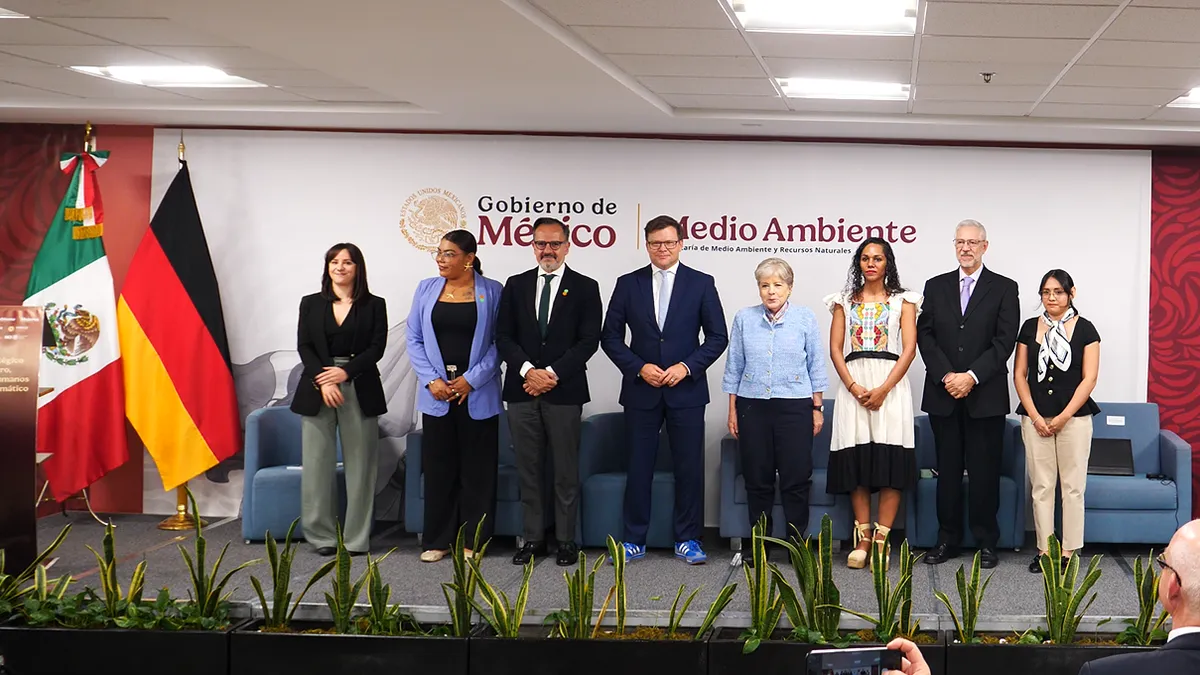
The plan was prepared with the support of the IKI Interface Mexico, which contributed to articulating different government institutions and consolidating a favourable environment for the implementation of the country's new Nationally Determined Contribution (NDC 3.0). This action also strengthens the National Biodiversity Strategy (ENBioMex) and the development of the Climate Change and Biodiversity Strategy for the Fisheries Sector, promoting greater coordination between the federal and state governments.
The second stage of the visit took the delegation to the Yucatan Peninsula, where an integrated strategy to decarbonize coastal value chains was presented. The initiatives combine ecosystem restoration, renewable energy, sustainable fisheries, low-carbon mobility, community tourism, and strengthening local governance, demonstrating how integrated territorial solutions can simultaneously promote biodiversity conservation, climate adaptation, and economic development.
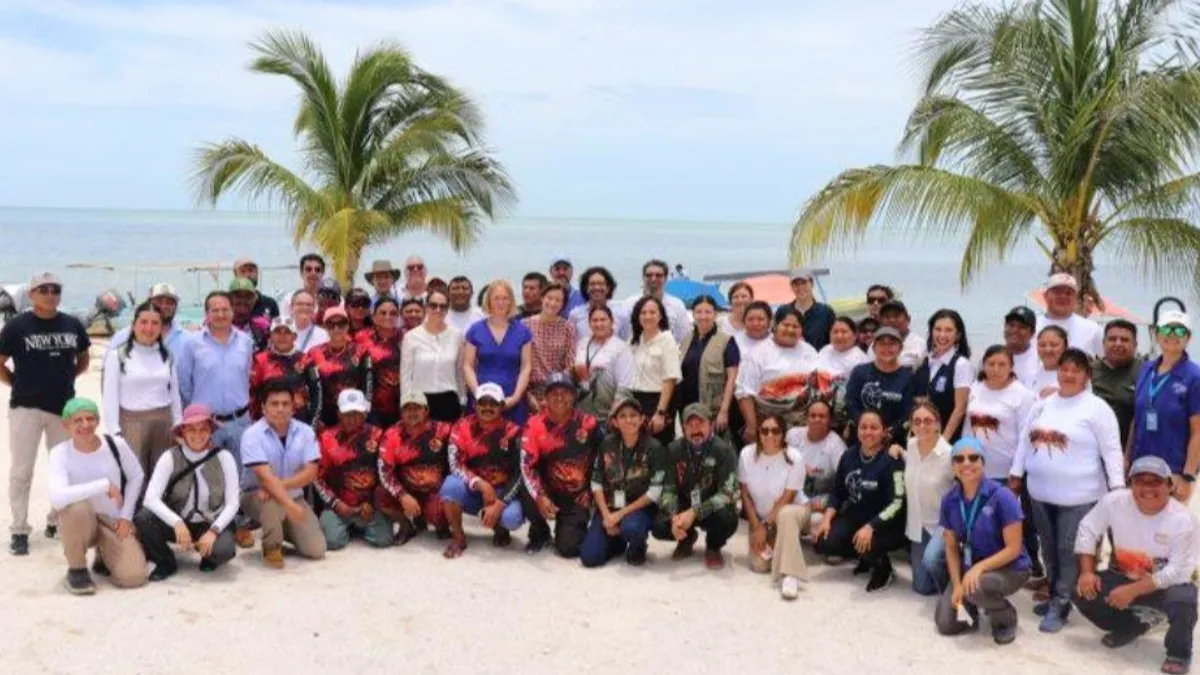
In Isla Arena, in the state of Campeche, the delegation learned about community surveillance projects with electric boats and drones to monitor coastal ecosystems, as well as the replacement of fossil fuel-powered engines with electric motors used in eco-tourism. Fishing cooperatives also presented ice production and cooling systems powered by solar energy, strengthening the cold chain of artisanal fishing, reducing emissions and adding value to local production. The "Solar Ice" project has already mobilized approximately 110 thousand euros to support these initiatives.
Biodiversity integrated into the community
Biodiversity also occupied a central place in the program. The Honey Kaab cooperative presented the Sweet Mangrove project, which integrates melipona bee breeding, regenerative beekeeping and mangrove restoration, reconciling income generation, strengthening female participation and environmental conservation. The Carey cooperative showed experiences of mangrove recovery that expand coastal protection, carbon capture and the conservation of fauna and flora.
The results achieved by the IKI Interface highlight the potential of this integrated approach. To date, six community distributed renewable energy projects have been implemented and 28 ecosystem-based adaptation initiatives have been strengthened through the FinTank Mentoring program, 12 of which have advanced to the investment phase and three have been presented to impact investors.
The initiative also supports subnational climate and biodiversity policy instruments in seven Mexican states and operates in eleven states of the country, promoting forest restoration, dune recovery, biocultural corridors, and coastal adaptation projects.
Throughout the visit, it became evident that cooperation between Mexico and Germany goes far beyond the financing of isolated projects. The IKI Interface in Mexico demonstrates how public policy, technical expertise, innovation, financing, and community action can be articulated into an integrated transformation strategy.
“By connecting governments, organizations, and communities, the initiative strengthens institutions, expands the capacity to implement climate policies, and contributes to building more resilient, inclusive, and biodiversity-positive development models, offering experiences that can inspire other countries in Latin America and the Caribbean”, concludes Fernanda Sotelo, IKI's communication advisor in Mexico.
