

A Cross-Cutting Approach to Projects, Public Policies and Territories
The IKI Interface Colombia acts as a bridge between governments, civil society, cooperation projects and territories, strengthening the implementation of the climate, biodiversity and energy transition agendas.


How to transform a broad and diverse portfolio of cooperation projects into a network capable of generating a collective impact? This is one of the main objectives of the International Climate Initiative (IKI) Interface in Colombia. Implemented by the Deutsche Gesellschaft für Internationale Zusammenarbeit (GIZ), the IKI Interface Colombia acts as a bridge between the government of Germany, Colombia, civil society, cooperation projects and territories, strengthening the implementation of the climate, biodiversity and energy transition agendas.
More than a coordination mechanism, the Interface functions as a platform for articulation, knowledge management, learning and connection between different levels. "The main objective of the Interface project is to contribute to the implementation of Colombia's climate, energy and biodiversity goals, strengthening collaboration between actors and promoting a gender approach," explains the director of the IKI Interface in Colombia, Sören Kirstein.
Launched in 2019, Colombia's IKI Interface was initially implemented within the framework of the project "Supporting Colombia to achieve its climate goals" (ProNDC). Since 2023, the project has been in its second phase, called "Supporting Colombia in the implementation of its climate, energy and biodiversity goals".
Currently, the Initiative works closely with key actors in the Colombian government, such as the Ministry of Environment and Sustainable Development (MinAmbiente), the Ministry of Mines and Energy (MinEnergía), the Ministry of Commerce, Industry and Tourism (MinComercio), the Institute of Hydrology, Meteorology and Environmental Studies (IDEAM) and the National Planning Department (DNP).
A bridge between cooperation and public policies
Colombia currently has 46 IKI projects, distributed in different themes and territories. One of the main challenges of the Interface is precisely to transform this diversity into opportunities for collaboration, exchange and learning.
"Knowledge sharing allows projects to learn from each other, build on existing approaches, and identify opportunities for collaboration, thereby scaling up results and impacts," Kirstein highlights.
In the climate field, the IKI Interface supports MinAmbiente in the updating and implementation of Colombia's Nationally Determined Contribution (NDC). Among the results is the support for the participatory process of NDC 3.0, which involved different sectors, civil society and incorporated the perspectives of indigenous, black, Afro-Colombian, Raizales, Palenquera (NARP), peasant, fishing and seed guardian women.
On the biodiversity agenda, the project contributed to the updating and implementation of Colombia's Biodiversity Action Plan to 2030, strengthening spaces for participation and supporting the incorporation of an intergenerational perspective that involved women, youth, and children. In addition, it strengthens monitoring systems and the development of innovative financing mechanisms for biodiversity.
In collaboration with MinEnergía, the IKI Interface also supports the just energy transition agenda, which includes the development of energy communities and the strengthening of regulatory frameworks such as the Gender Policy of the mining and energy sector. The work also extends to the private sector, with the aim of integrating climate, biodiversity and gender into business strategies.
Knowledge that circulates
To promote the exchange of knowledge between the projects, the Colombian IKI Interface promotes different spaces for exchange, such as annual workshops, thematic working groups and networking meetings, in addition to digital knowledge management mechanisms.
The IKI Cafecito is one of the most characteristic formats. It takes place every three months and brings together representatives of the IKI projects, representatives of the Colombian and German governments and civil society in an informal atmosphere to share experiences, discuss challenges and identify opportunities for collaboration on a topic of interest to the IKI network.
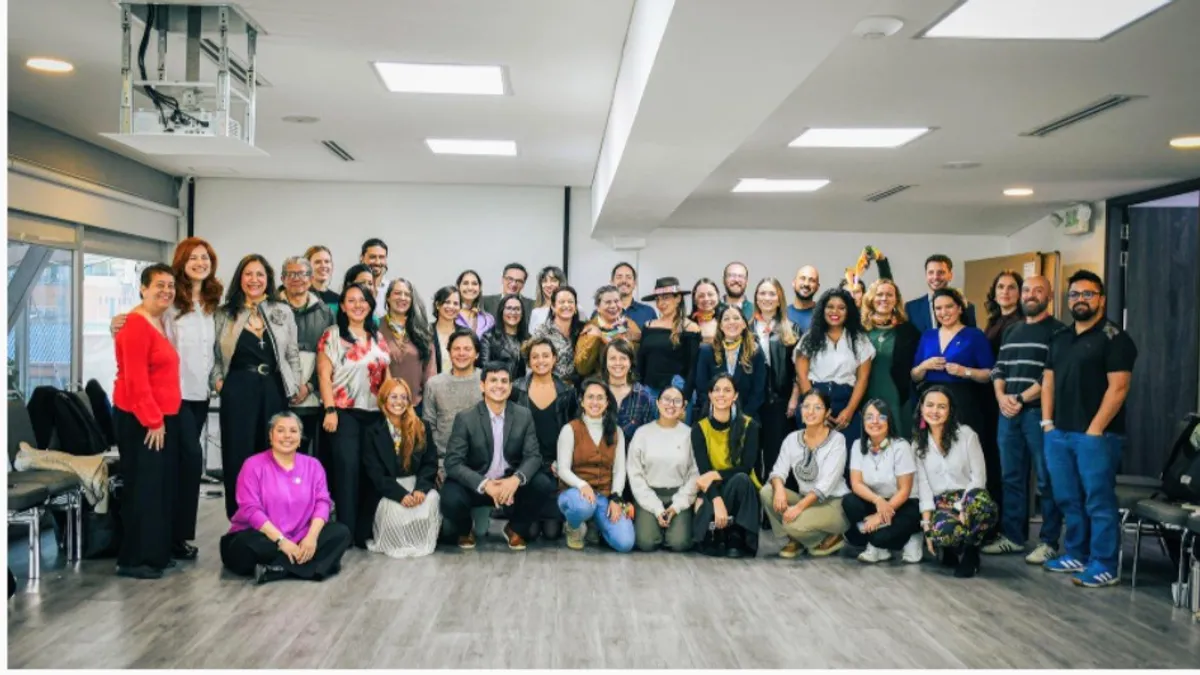
At the last IKI Cafecito, the cross-cutting dimension of gender was reinforced, not as an additional component of the projects, but as an approach capable of strengthening impacts, expanding local leadership, and contributing to more effective public policies.
According to Marcela Rodríguez, Gender Focal Point of the IKI network in Colombia and member of the IKI Interface Project, "it is not that women should be included in climate action... It is that climate action needs them to be effective."
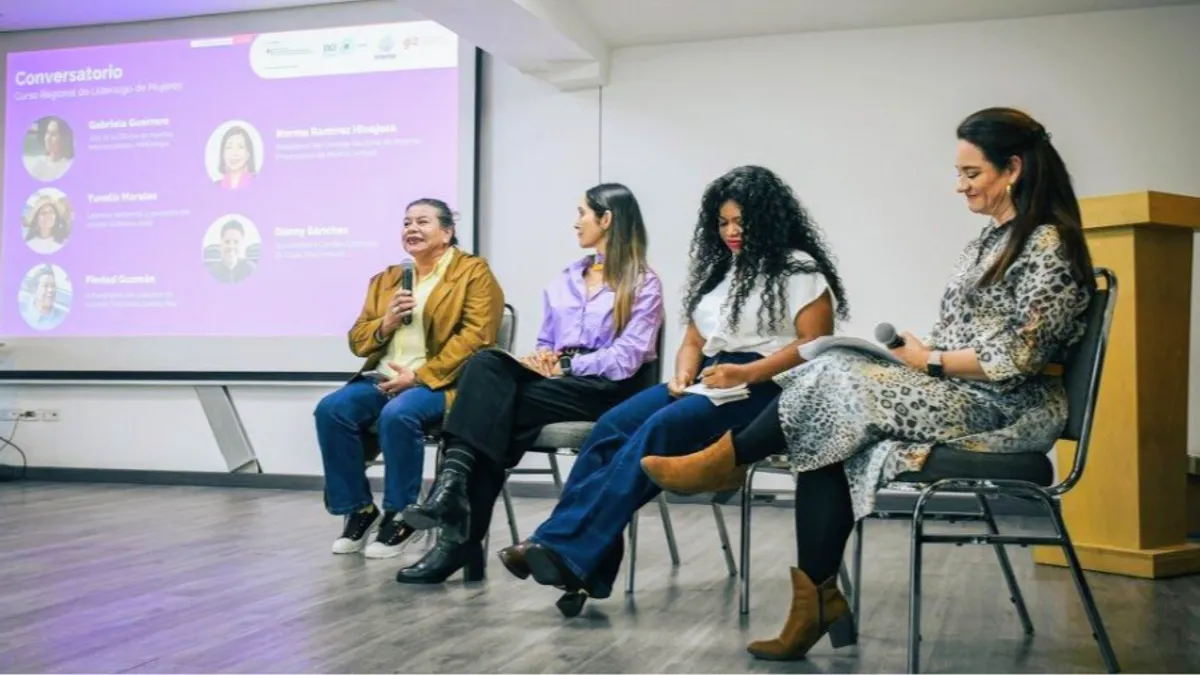
The regional articulation capacity of the IKI Interface was evident in the Regional Women's Leadership Course, which brought together women leaders and decision-makers from Latin America and the Caribbean. This initiative was promoted by the German Federal Ministry for the Environment, Climate Action, Nature Protection and Nuclear Safety (BMUKN) in conjunction with the United Nations Development Programme (UNDP) and the Ministries of Energy, Environment and Foreign Affairs of Colombia.
The initiative had the participation of partners from the IKI Interfaces of Mexico, Costa Rica and Brazil, expanding the training beyond Colombian borders. Indigenous women, Afro-descendant leaders, representatives of rural communities, entrepreneurs and government representatives strengthened their capacities to influence the climate, energy and biodiversity agendas, building a network of women committed to the just transition. For the Interface, initiatives like this demonstrate that regional cooperation can generate results that go beyond a project or a country.
From politics to territories
The work of the Interface also approaches local experiences. ClimatIKIando is a podcast of the IKI Interface project co-created with other IKI projects in Colombia. Its objective is to make visible the diverse voices of IKI projects in the country considering different perspectives: the local approach from the territories, the technical vision of its implementers and the perspective at the national level.
The podcast has 3 episodes that address topics such as community monitoring of biodiversity, nature-based solutions and the cross-cutting role of gender in climate and biodiversity. The experiences reflected in the podcast help to understand how national and international biodiversity and climate agendas materialize in the territories. Listen to the climatIKIando podcast here: https://ikicolombia.com/biblioteca/podcast-climatikiando/
A network to scale up impact
The Colombian experience shows that the value of a portfolio of projects lies not only in the sum of its individual initiatives, but also in the ability to connect them.
For the Interface team, one of the main lessons is that "cooperation networks must be built continuously." Creating permanent spaces for dialogue, fostering trust between partners, and investing in strategic communication are factors that strengthen results and allow for the sharing of experiences between projects.
This process also requires facing the constant challenge of "connecting a broad and diverse portfolio, made up of projects that operate in different biomes, scales, themes and regions of the country." The maintenance of an active network, according to the director of the IKI Interface, requires "permanent dialogue, listening and adaptation to the different realities of the partners."
The strategy for the coming years aims to strengthen regional networks and exchange between the IKI Interfaces in Latin America and the Caribbean, expanding peer-to-peer learning formats and coordinated actions.
In practice, the Interface works to ensure that knowledge circulates, experiences are shared and international cooperation is translated into capacity for action: from national policies to communities on the frontlines of climate transformation.
